Guide to Substantive Feedback
What is Substantive Feedback
At Bryan University, providing students with quality feedback is paramount and a primary faculty interaction. As defined in the US Department of Education’s distance education standard (Federal Register, 2020), substantive feedback should:
Demonstrate the monitoring of student progress toward mastery of the subject matter.
Demonstrate evidence of interaction with a student’s work.
Substantive feedback tells students “what they are or are not understanding, where their performance is going well or poorly, and how they should direct their future efforts” (Ambrose et al., 2010, p. 137). Substantive feedback is detailed, specific, and actionable. It helps students understand exactly what they’ve done well and where they can improve. It goes beyond surface-level comments and provides meaningful insights into their work, fostering growth and development.
Characteristics of Substantive Feedback
Substantive Feedback is:

It pinpoints exactly what was done well and what needs adjustment. Instead of saying “Good work,” a substantive comment might be “Your argument is well-supported with evidence, but consider adding more examples to strengthen your conclusion.”

Constructive feedback acknowledges the student’s efforts and successes, which helps to motivate and build their confidence. For example, “You did an excellent job analyzing the data; your interpretation is clear and insightful. Keep up this level of critical thinking in future assignments!”
Feedback should pinpoint where the student can improve and offer clear advice on how to make those improvements. This might involve suggesting changes to specific sections, trying different approaches, or focusing on key content areas. For example, instead of just saying “Good thesis,” you might say, “Your thesis is strong. To improve, add more details in your supporting paragraphs and make sure they clearly connect to your thesis.”
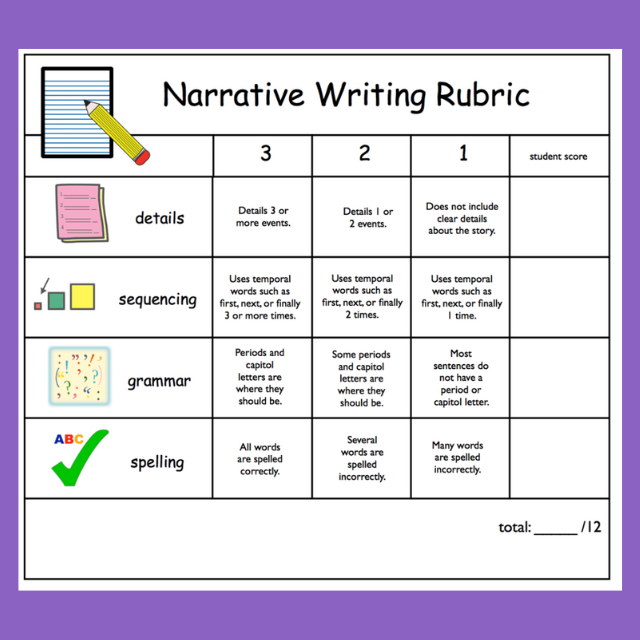
When there is no rubric, feedback should clearly connect to the assignment’s instructions and goals to help the student see how their work meets the expected outcomes. For instance, if the assignment was to solve a set of problems using specific methods, you could say, “The assignment asked you to solve problems using both algebraic and geometric methods. You correctly used algebraic methods, but make sure to apply geometric methods as well to fully complete the assignment.”
Key Considerations for Writing Effective Substantive Feedback
Personalization is key!
All students should receive feedback that is specific to their individual work. Generic comments can be a starting point, but they should be supplemented with personalized insights to address the unique aspects of each student’s performance.
Use Templates or Comment Libraries Wisely!
While templates and comment libraries can help streamline the feedback process, they should not replace personalized comments. Use templates or comment libraries as a base for common feedback areas, but always add specific details related to the student’s work. For example, if using a template comment like “Your introduction needs more detail,” tailor it by specifying which part of the introduction needs elaboration and how it can be improved.
▶️Watch the following video to learn more about how to use templates wisely!
Approaches to Giving Substantive Feedback
Approach #1: The Compliment Sandwich Technique
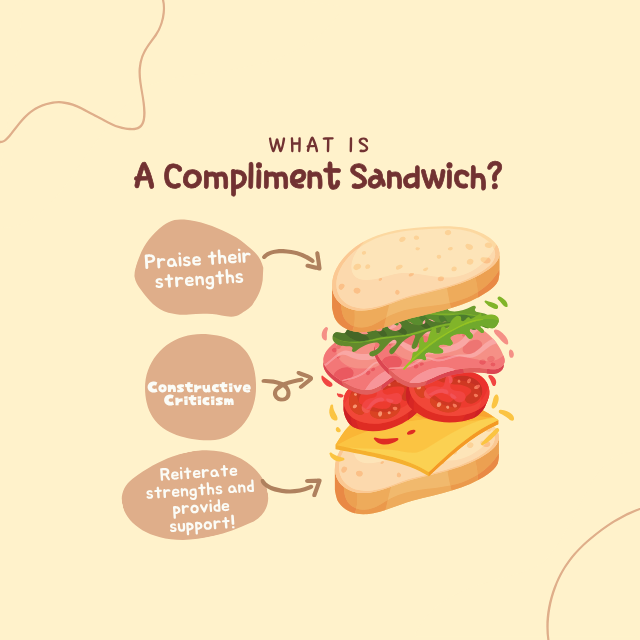
Step 1: Provide a Compliment! Make it sincere and specific! This can be something they did well, a strong point in their performance, or an aspect of their work that you genuinely appreciate! This positive reinforcement sets a supportive and encouraging tone.
Step 2: Offer Areas of Improvement and Constructive Feedback Identify areas of improvement. Be specific, clear and objective about what needs to be worked on. In this part of the sandwich, offers guidance on how to address these issues. Offer actionable suggestions for improvement. This is the meat of the sandwich! Note: If the student got a perfect score, don’t skip this section. Instead, offer additional resources that relate to the topic or explain how this assignment will build on future assignments.
Step 3: Tie to Assignment (if no rubric provided) and End with another Compliment! Offer another positive comment or compliment about the student’s work! This helps to reinforce the idea that you value the individual’s efforts and believe in their potential for improvement. If applicable, encourage the student to re-submit for mastery.
Approach #2: Aligning Feedback with Course Learning Objectives (CLO)
Step 1
Locate the CLOs in the syllabus. Each course has both course level outcomes (CLOs) as well as weekly objectives.
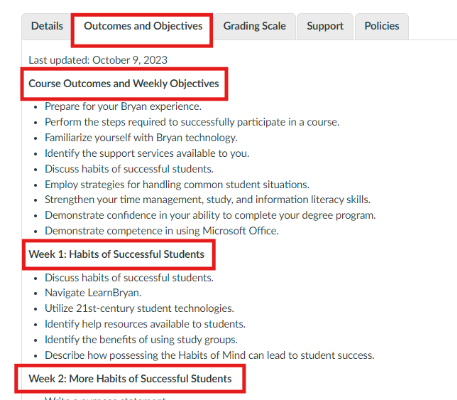
Step 2
Determine where the assignment you are leaving feedback for falls within the CLOs and/or weekly objectives. For example, how might you align the Week 5 Assignment, below, from UNV-101 to the CLOs?
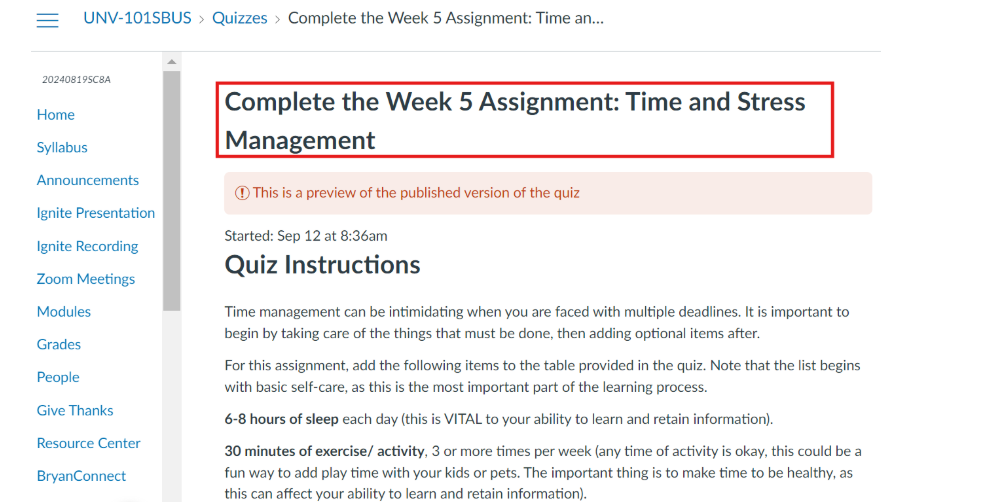
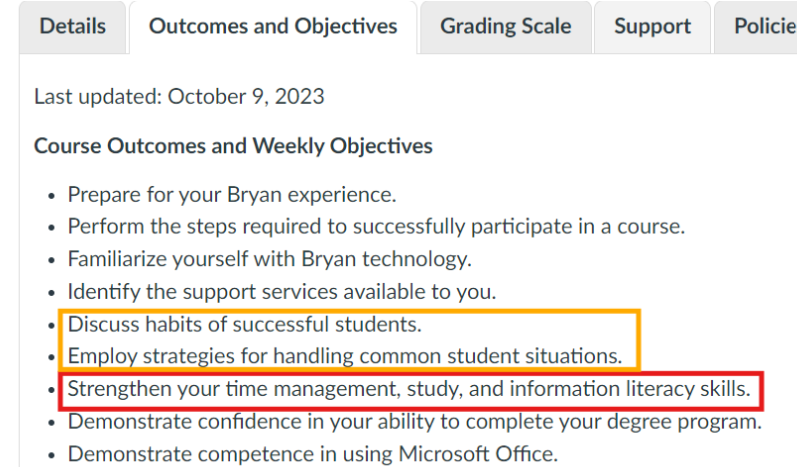
Your answer could be the CLO in the red box, but this assignment could possibly be satisfying the yellow box as well- that is up to you to decide how you assess the student’s work by aligning the work to the CLOs. Faculty are the Subject Matter Experts (SMEs), so you need to assess student performance against the CLOs provided and create your feedback based on the CLOs.
Step 3
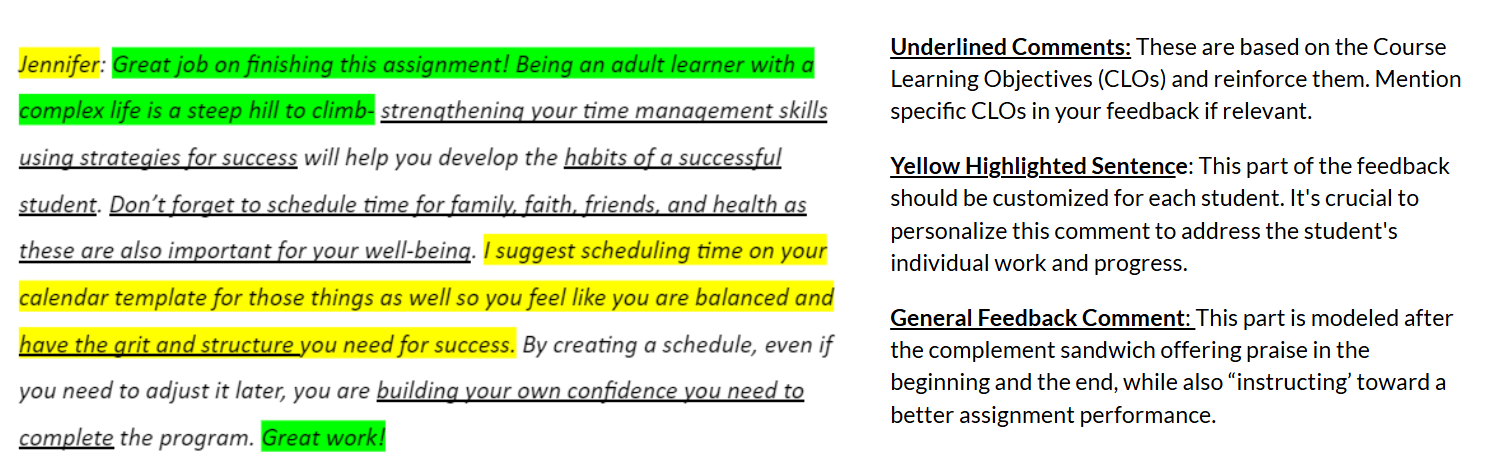
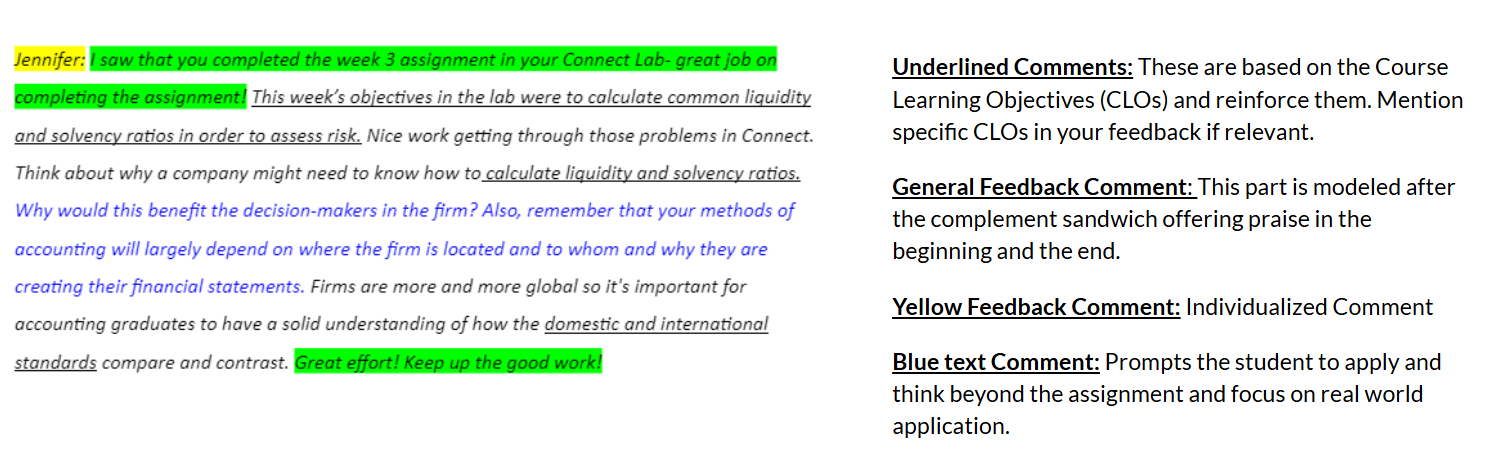
Create a substantive feedback comment for the student assignment, using the compliment sandwich technique and addressing the student’s progress and CLOS mastery. Here is an example for the assignment above.
What if a Student gets a perfect score?
If a student gets a perfect score on their assignment, it’s important to celebrate their achievement with specific, meaningful praise. However, providing substantive feedback remains crucial, even for flawless work.
Here’s what you can do:
Avoid generic comments like “Great job” or “Nice work.” Feedback should be meaningful and specific.
If several students perform similarly, general comments can be reused, but each student’s feedback should still highlight individual strengths and unique contributions. Repetitive comments are acceptable for similar performance, but they should have enough variation to avoid sounding mechanical or impersonal. No two students should get the same feedback.
Tie the feedback to the assignment. Provide feedback that directly connects to the objectives of the assignment. For example, if the task was about critical thinking, praise their ability to analyze complex ideas, and suggest ways they could apply those skills in different contexts.
Personalize the feedback: While repeating certain positive comments is fine, always tailor the feedback to each student’s specific work, acknowledging their individual effort and achievements.
Substantive feedback, even on perfect work, helps students stay engaged and continue growing, rather than plateauing. It emphasizes that learning is an ongoing process, not just about getting the right answer.
What about Auto-graded Assignments and Labs?
Does your class have assignments that Canvas auto grades or assignments/courseware like McGraw Hill Connect, Cengage Mindtap, McGraw Hill, ALEKS, or any other “lab” courseware in which the students work inside the courseware, and not in Canvas? Individualized feedback is tough to record and track. What should you do? Simple grade book comments in Canvas, when a student completes an assignment, let them know you have reviewed their work and that you “see” them in class. No student wants to think they are working in a vacuum and that their instructor thinks they are invisible. The best suggestion is to create overall assignment feedback for the Canvas Grade book that addresses the following:
A for effort! We always want to acknowledge our students’ efforts to complete their work.
How did the weekly assignments in the lab courseware help students to master the CLOs.
Encouragement to continue their learning beyond the course, as well as continued encouragement for their effort they are putting into their learning.
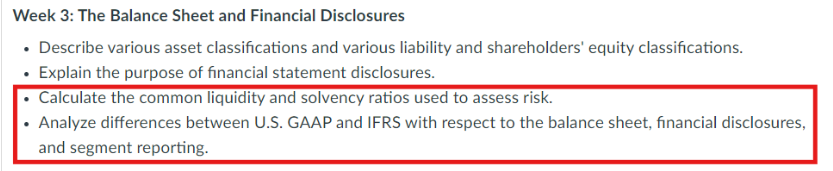
Here is an example of a class syllabus’ CLO for Week 3 for a bachelor-level accounting class that uses McGraw Hill Connect Labs.
Additional Notes and Considerations
Clarify Deductions: When there is no rubric and points are deducted, provide a clear explanation in the grade book comments to justify the grade, include the specific points deducted for the needed corrections, e.g., -2 points, and actionable steps the student can take to resubmit for mastery. If there is a rubric, include actionable steps the students can take to resubmit for mastery.
Use Standard Comments: Utilize a set of standard comments to maintain grading efficiency. Consider creating a library of these comments for quick reference. (Note: It is still important to customize standard comments. No two students should get identical feedback.)
Re-Submit for Mastery: Always support, within the grading comments, re-submission for mastery. Make sure to indicate when the re-submission needs to be turned in.
Encourage Late Submissions: Remind students who haven’t submitted assignments to do so, even if only partially, to ensure they receive some credit instead of a zero.
Grade Quickly: Quick turnaround on assignments has a positive and motivating effect on students. Best turnaround time is within 3 days of submission. Per the Faculty Handbook, all students should receive a grade and feedback within 4 days of the due date.
Ambrose, S.A., Bridges, M.W., DiPietro, M., Lovett, M.C., & Norman, M.K. (2010). How learning works: Seven research-based principles for smart teaching. Jossey-Bass.
Copyright 2025 | Bryan University | 350 West Washington Street, Tempe, AZ 85281

Copyright 2025 | Bryan University | 350 West Washington Street, Tempe, AZ 85281